20-06-2024 - It was with sadness that we learned of the death of Jan Cremer (1940 - 2024).
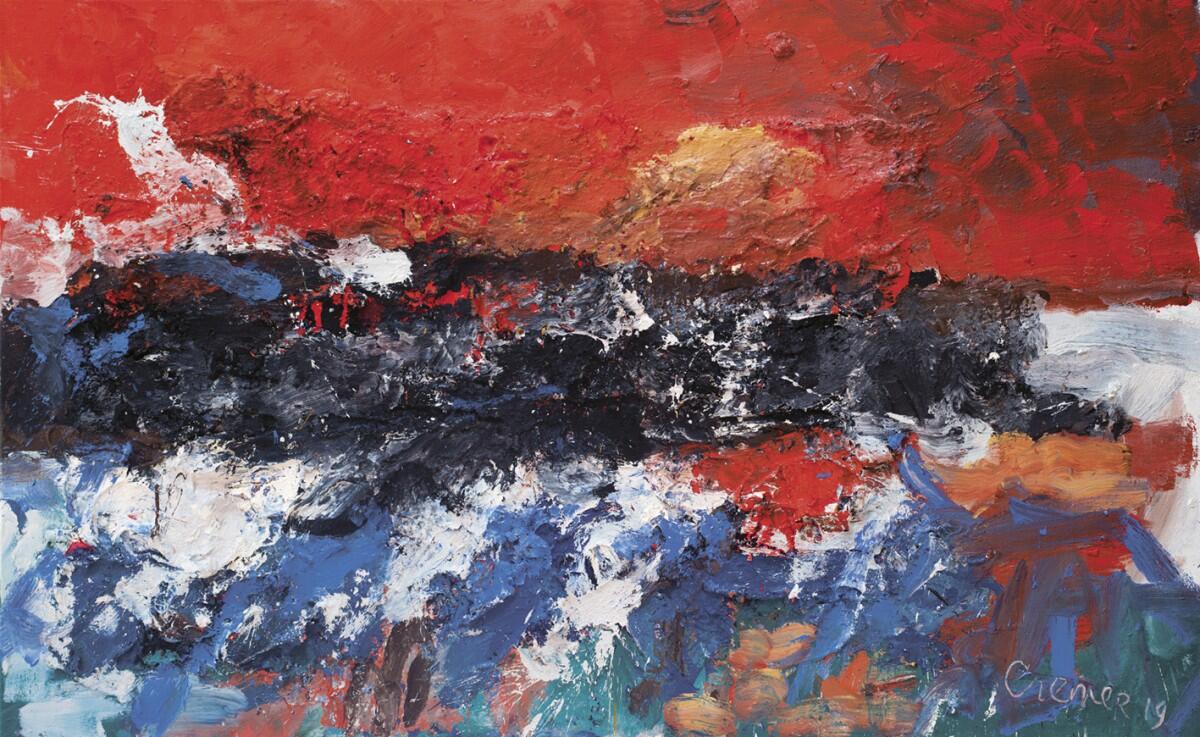
Jan Cremer is among the most important creators in our collection. With his double talent as a painter and writer and his rebellious attitude in both disciplines, he had a huge impact. With 28 works, created between 1955 and 2010, Museum de Fundatie holds the most important museum collection of Cremer's works. We are currently staging an exhibition of 'Museum de Fundatie te gast' at Kunsthal Hof88 in Almelo, featuring works by Cremer. This exhibition opens on Sunday 23 June and will be a tribute to him. Currently on display at Museum de Fundatie in Zwolle is Jan Cremer's 1960 five-panel La Guerre Japonaise, one of his most important works in our collection.
Cremer was not a writer painter. It all started with painting, the writing came afterwards. Or perhaps it is more accurate to say it started with looking. Indeed, for Cremer, painting and writing are two different ways of capturing and processing what he sees around him. One time on paper, the other time in paint.
The young Jan Cremer, born on 20 April 1940 in Enschede, studied art in Arnhem and The Hague and left in 1959 for Paris, at the time the most important centre of art and culture in Europe.
In Paris he developed his so-called 'Peinture Barbarisme' , with expressive gesture painted canvases with thick layers of paint, mixed with sand, jute and other materials. With his unorthodox technique and ditto personality, he instantly placed himself at the centre of modern art.
In 1961, Cremer left the metropolis Paris (where he did keep a studio) for remote Ibiza. The scorching sun and rugged landscape led to a series of works that almost look Japanese in their incisive writing. They show how painting and writing can be an extension of each other and sometimes overlap. With Cremer, this was literally the case. The publication of his no-holds-barred picaresque novel Ik Jan Cremer in 1964 shocked the cultural elite in the Netherlands. With the proceeds of this 'unrelenting bestseller', which was later translated into dozens of countries, he settled in the Chelsea Hotel in New York. There he started painting again, this time not abstract canvases full of paint but expressive and colourful fields of tulips. Cremer's incorporation of the pre-eminent Dutch cliché image may be seen as a connection between the pure painting of Paris and Ibiza with the great Dutch landscape tradition on the one hand and the anti-traditional pop art of New York on the other.
We mourn this great loss to the Dutch art world and wish Jan's wife Babette, his children and the rest of the family much strength.