For the digital works in Umbild Jules van Hulst and Wieger Steenhuis sight inspired by three Flemish symbolists. These 19th-century artists did not just want to show what the world looked like. Above all, they wanted to depict feelings, dreams, secrets and thoughts. Their art is often quiet, mysterious and sometimes a little strange. Find out what inspired Umbild.
George Minne, De geknielde van de fontein, 1898
George Minne spent many years exploring the theme of the kneeling, inward-looking boy. In doing so, he aimed for maximum expression with minimal means. The Kneeling Youth of the Fountain is the culmination of his search for clean lines and clear form.
The Flemish sculptor did not strive for anatomical accuracy. The boy appears elongated, and his head and hands seem too large for his slender body. The bowed head and the arms folded across the chest give the sculpture a mystical and somewhat ascetic character. The Kneeling Youth of the Fountain is Minne’s best-known work. He made versions in plaster, bronze and marble. Commissioned by a German collector, he also created a sculptural group consisting of five identical kneeling figures placed on the edge of a circular basin. A marble version of this Fountain of the Kneeling Youths is held by Museum Folkwang in Essen.
Image: George Minne, The Kneeling Youth of the Fountain, 1898, bronze, 78 x 18.3 x 43.5 cm
Photography: Peter Tijhuis


James Ensor, Bibelots, 1935
The work of James Ensor is difficult to place in a single category. For convenience, his oeuvre is often associated with Symbolism, but he has also been described as both the first Belgian Impressionist and a forerunner of the Belgian Expressionists. His still life Bibelots is one of the smallest works in the Fundatie Collection. In the light colours so characteristic of his work, Ensor paints a collection of worthless objects, emphasising human vanity.
Image: James Ensor, Bibelots, 1935, oil on panel, 12 x 16 cm
Photography: Peter Tijhuis


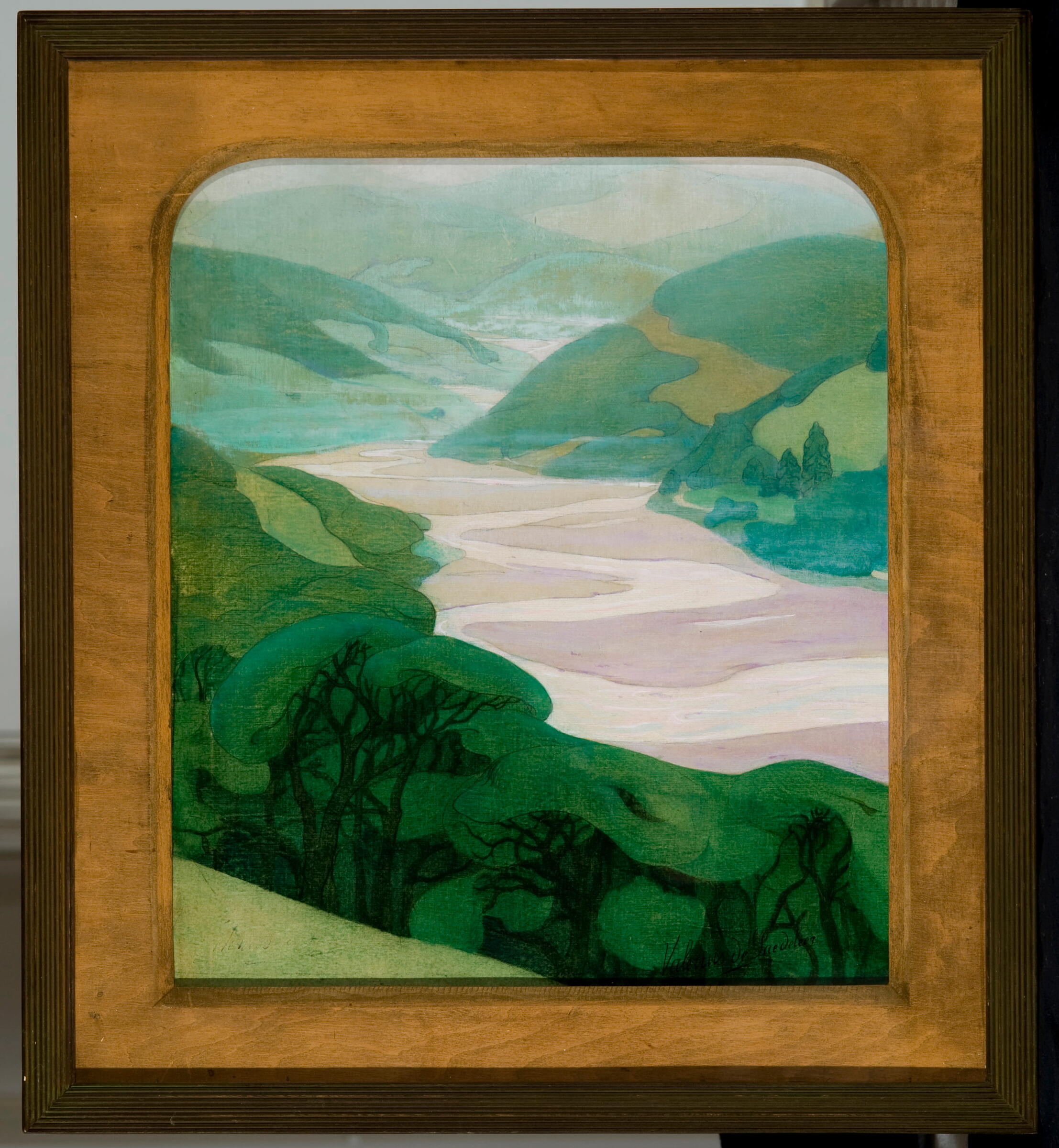
Valerius de Saedeleer, Landscape in Wales, 1917
Together with artists including George Minne, Valerius de Saedeleer lived from 1898 to 1904 in the village of Sint-Martens-Latem on the River Leie. At the height of industrialisation, he and several other artists sought stillness, peace and nature. De Saedeleer was strongly influenced by the work of Pieter Bruegel the Elder (c. 1525–1569). Combining this influence with a deep sense of connection to nature, he painted wide, open and panoramic landscapes. During the First World War, De Saedeleer fled to Wales. This painting was made there.
Image: Valerius de Saedeleer, Landscape in Wales, 1917, marouflé, 38 x 33 cm
Photography: Peter Tijhuis

